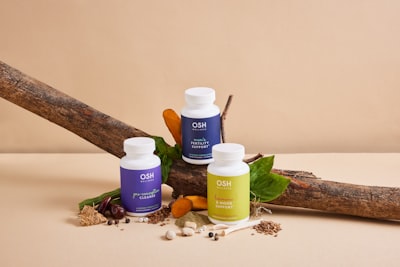
NMN Benefits, Dosage & Supplement Guide 2026: The Complete Overview
Medically reviewed by Dr. Sarah Mitchell, MD — Internal Medicine
See also: Best Longevity Supplements 2026: NMN, Resveratrol, CoQ10 & More | NMN vs NR: Which NAD+ Precursor Is Better in 2026?
Quick Summary
Nicotinamide Mononucleotide (NMN) is a nucleotide derived from ribose and nicotinamide. It’s the direct precursor to NAD+ (nicotinamide adenine dinucleotide), a coenzyme essential for cellular energy production, DNA repair, and gene expression. NMN supplementation aims to restore declining NAD+ levels associated with aging.
| Detail | Info |
|---|---|
| Best For | NAD+ restoration, longevity, metabolic health, energy |
| Effective Dose | 250-1,000mg/day |
| Onset | 2-4 weeks for measurable NAD+ elevation |
| Safety | Good — well-tolerated in human trials |
| Storage | Cool, dry, dark (NMN degrades with heat/moisture) |
| Key Concern | Regulatory status (FDA crackdown in 2022-2023) |
What Is NMN?
Nicotinamide Mononucleotide (NMN) is a naturally occurring molecule found in all life forms. It’s present in small amounts in foods like edamame, broccoli, cabbage, cucumber, and avocado — but at quantities far below therapeutic doses (you’d need to eat ~100kg of broccoli to get 500mg NMN).
In the body, NMN is converted directly to NAD+ (nicotinamide adenine dinucleotide) in a single enzymatic step catalyzed by nicotinamide mononucleotide adenylyltransferase (NMNAT). NAD+ is a critical coenzyme involved in over 500 enzymatic reactions.
Why NAD+ Matters
NAD+ is essential for:
- Energy metabolism: NAD+ is required for glycolysis, the TCA cycle, and oxidative phosphorylation — the three main pathways that convert food into ATP (cellular energy)
- DNA repair: NAD+ is a substrate for PARP enzymes (poly-ADP-ribose polymerases), which repair damaged DNA
- Sirtuin activation: NAD+ activates sirtuins (SIRT1-7), a family of proteins that regulate gene expression, metabolism, and aging. Sirtuins are often called “longevity genes.”
- Mitochondrial function: NAD+ maintains mitochondrial health and biogenesis
- Calcium signaling: NAD+ metabolites (NAAD, NADP) regulate calcium signaling in cells
The NAD+ Decline Problem
NAD+ levels decline significantly with age:
- Age 25-30: Peak NAD+ levels
- Age 40-50: ~40-50% decline
- Age 60-70: ~60-80% decline
This decline is associated with:
- Reduced cellular energy production (fatigue)
- Impaired DNA repair (increased cancer risk)
- Reduced sirtuin activity (accelerated aging)
- Mitochondrial dysfunction
- Insulin resistance and metabolic syndrome
📊 The promise: Restoring NAD+ levels to youthful ranges could theoretically slow or partially reverse multiple hallmarks of aging. This is the foundational hypothesis behind NMN supplementation.
How NMN Works
The NAD+ Salvage Pathway
Your body produces NAD+ through three pathways:
- De novo pathway: From tryptophan (8-step process)
- Preiss-Handler pathway: From niacin (vitamin B3, 3-step process)
- Salvage pathway: From NMN or NR (nicotinamide riboside, 1-2 step process)
The salvage pathway is the most efficient, accounting for ~80% of NAD+ production. NMN enters this pathway directly — it’s converted to NAD+ in a single step by NMNAT enzymes.
NMN vs. NR (Nicotinamide Riboside)
NMN and NR are the two most popular NAD+ precursors. Key differences:
| Factor | NMN | NR |
|---|---|---|
| Size | Larger molecule | Smaller molecule |
| Conversion to NAD+ | 1 step (via NMNAT) | 1 step (via NRK) |
| Direct cellular uptake | Debated (may require dephosphorylation to NR first) | Direct (via equilibrative nucleoside transporters) |
| Clinical evidence (human) | Growing (Irie et al., 2020; Yi et al., 2023) | More extensive (Martens et al., 2018; Conze et al., 2019) |
| Stability | Less stable (degrades with heat/moisture) | More stable |
| Cost | Higher | Lower |
| Research pedigree | David Sinclair, PhD (Harvard) | Charles Brenner, PhD (NR discoverer) |
Current consensus: Both NMN and NR effectively raise NAD+ levels. NMN may have tissue-specific advantages (it appears to be preferentially taken up by certain tissues), but the clinical significance of this is still being studied.
Clinical Evidence
Human Studies
Irie et al. (2020):
- Design: Randomized, double-blind, placebo-controlled
- Subjects: 30 healthy men (40-60 years)
- Intervention: 250mg NMN/day for 12 weeks
- Results: Significantly increased blood NAD+ levels (approximately 2-fold increase). No serious adverse events.
- Significance: First human trial to demonstrate NMN safety and NAD+ elevation in Japan.
Yi et al. (2023):
- Design: Randomized, double-blind, placebo-controlled
- Subjects: 80 healthy adults (40-65 years)
- Intervention: 300mg, 600mg, or 900mg NMN/day for 60 days
- Results: Dose-dependent increase in blood NAD+ levels. 600mg and 900mg doses increased NAD+ by approximately 2-3 fold. Improved muscle insulin sensitivity in the 600mg and 900mg groups.
- Significance: Demonstrated dose-response relationship and metabolic benefits.
Mills et al. (2016):
- Design: Preclinical (mouse study)
- Results: NMN supplementation (300mg/kg/day) in aged mice improved blood flow, exercise endurance, and multiple metabolic markers. Effects were mediated through sirtuin activation.
- Significance: Foundational study that launched the NMN field.
de Guia et al. (2019):
- Design: Preclinical (mouse study)
- Results: NMN supplementation restored NAD+ levels and improved metabolic health in aged mice with NAD+ deficiency.
Animal Studies (Key Findings)
The preclinical evidence for NMN is extensive and impressive:
- Improved insulin sensitivity and glucose tolerance
- Enhanced exercise endurance and muscle function
- Improved blood flow and vascular health
- Neuroprotection and improved cognitive function
- Improved mitochondrial function
- Extended healthspan (though not necessarily lifespan)
⚠️ Important caveat: Many of the most impressive NMN results come from mouse studies using doses that would be equivalent to very high human doses. Human translation is still ongoing.
NMN Dosage Guide
By Goal
| Goal | Dose | Timing | Notes |
|---|---|---|---|
| General NAD+ support | 250-500mg/day | Morning, empty stomach | Minimum effective dose |
| Longevity / anti-aging | 500-1,000mg/day | Morning, empty stomach | Most common dose in studies |
| Metabolic health | 600-900mg/day | Morning, empty stomach | Yi et al. used this range |
| Athletic performance | 500-1,000mg/day | Morning + pre-workout | Supports mitochondrial energy |
| Cognitive support | 500mg/day | Morning | Neuroprotective effects |
Dosing Principles
- Start low: Begin with 250mg/day for the first week to assess tolerance
- Increase gradually: Move to 500mg/day in week 2, then 1,000mg/day if desired
- Take on an empty stomach: Most practitioners recommend taking NMN 30-60 minutes before breakfast for optimal absorption (though this is based on theory, not clinical evidence)
- Morning timing: NAD+ is involved in energy production. Taking NMN in the morning aligns with the body’s natural circadian NAD+ rhythm (NAD+ peaks during the active phase)
Timing & Administration
Sublingual vs. Oral
Sublingual (under the tongue):
- Bypasses first-pass metabolism
- May provide faster absorption
- Preferred by many NMN users
- Hold powder or troche under tongue for 2-3 minutes before swallowing
Oral (capsule/powder in water):
- More convenient
- Absorbed through the GI tract
- May be partially degraded by stomach acid (though NMN is relatively acid-stable)
- Still effective based on clinical trials
With or Without Food?
The clinical trials used both approaches. Theoretically, taking NMN on an empty stomach may improve absorption, but there’s no definitive human data comparing fed vs. fasted NMN absorption.
Practical recommendation: Take NMN first thing in the morning, 30-60 minutes before breakfast. This is convenient, aligns with circadian NAD+ rhythms, and may optimize absorption.
Cycling: Should You Cycle NMN?
There’s no definitive answer, but here are the common approaches:
Continuous Use
- Most common approach
- No evidence of tolerance or receptor downregulation
- Supported by the fact that NAD+ is a natural metabolite, not a drug
5 Days On / 2 Days Off
- Some practitioners recommend this to prevent potential feedback inhibition
- Theoretical rationale: Giving the body a break may prevent downregulation of NAD+-consuming enzymes
- No clinical evidence supporting this approach
3 Months On / 1 Month Off
- More conservative cycling approach
- Allows reassessment of whether continued supplementation is needed
💡 Our recommendation: Continuous use is likely fine based on current evidence. NAD+ is a natural metabolite, and supplementation simply restores age-related decline. However, if you’ve been taking NMN for 6+ months, a 2-4 week break to reassess is reasonable.
Side Effects & Safety
Clinical Trial Data
NMN has been well-tolerated in human trials:
- Irie et al. (2020): No serious adverse events at 250mg/day for 12 weeks
- Yi et al. (2023): No serious adverse events at 300-900mg/day for 60 days. Mild side effects (flushing, nausea) were rare and not dose-dependent.
Reported Side Effects (Anecdotal)
- Mild: Flushing, nausea, headache, insomnia (if taken late in the day)
- Rare: Digestive discomfort, dizziness
- Very rare: None reported in clinical literature
Long-Term Safety
- No long-term (>1 year) human safety data exists
- Animal studies up to 12 months have shown no serious adverse effects
- The endogenous nature of NMN and NAD+ suggests a favorable safety profile
Who Should Be Cautious
- Cancer patients: NAD+ supports cell proliferation, which could theoretically promote cancer growth. Consult your oncologist.
- Pregnant/breastfeeding: No safety data. Avoid.
- Children: No safety data. Not recommended.
Storage: Critical for NMN Quality
NMN is notoriously unstable. It degrades with:
- Heat: Degrades rapidly above 30°C (86°F)
- Moisture: Hygroscopic (absorbs water from air)
- Light: UV light accelerates degradation
- Acid: Degrades in acidic environments
Storage Best Practices
- Keep in a cool, dry place: Refrigerate after opening
- Keep the lid tightly closed: Minimize moisture exposure
- Use within 3 months of opening: NMN potency decreases over time
- Buy from reputable sources: Look for third-party testing (HPLC purity >98%)
- Avoid capsules with excessive fillers: Pure NMN powder or troches are preferred
💡 Quality test: Pure NMN powder should be white to slightly off-white. Yellow or brown discoloration indicates degradation.
Best NMN Products: What to Look For
| Factor | What to Look For | Red Flag |
|---|---|---|
| Purity | ≥98% (HPLC tested) | No purity testing |
| Form | Sublingual troche or powder | Capsules with fillers |
| Third-party testing | COA available | No COA |
| Storage | Shipped cold or with desiccant | Shipped at room temperature without protection |
| Dose per serving | 250-500mg | <100mg (sub-therapeutic) |
| Price per gram | $0.50-1.50 | >$3.00 (overpriced) |
NMN Stacks Well With
- Resveratrol: Activates SIRT1 (the same sirtuin pathway that NAD+ fuels). The combination may be synergistic — NAD+ provides the fuel, resveratrol activates the engine.
- TMG (Trimethylglycine): Methyl donor that supports the methylation cycle. NMN metabolism consumes methyl groups; TMG replenishes them.
- Astaxanthin: Potent antioxidant that complements NAD+ restoration
- CoQ10: Supports mitochondrial energy production downstream of NAD+
- Vitamin B2 (Riboflavin): Cofactor for NMNAT, the enzyme that converts NMN to NAD+
Frequently Asked Questions
What is the best dose of NMN?
500mg/day is the most commonly used dose and appears to be the sweet spot between efficacy and cost. Clinical trials have used 250-900mg/day, with 600mg showing the best metabolic outcomes in the Yi et al. (2023) study.
Should I take NMN in the morning or evening?
Morning is preferred. NAD+ is involved in energy production, and NAD+ levels naturally peak during the active (daytime) phase. Taking NMN in the morning aligns with this circadian rhythm.
Is NMN better than NR?
Both effectively raise NAD+ levels. NMN is the direct precursor (one step to NAD+), while NR is also one step away. The clinical significance of the difference is unclear. NR has more human trial data; NMN has a stronger research pedigree (David Sinclair). Choose based on cost, availability, and personal preference.
How long before NMN works?
Blood NAD+ levels increase within hours of the first dose. Clinical benefits (improved energy, metabolic markers) typically emerge after 2-4 weeks of consistent use.
Is NMN legal?
As of 2026, NMN’s regulatory status is complex. The FDA has ruled that NMN cannot be marketed as a dietary supplement because it was first studied as a drug. However, it remains available from many retailers. Check your local regulations.
Can I get enough NMN from food?
No. Foods contain NMN in very small amounts (1-2mg per kg of food). To get a therapeutic dose (500mg), you’d need to eat impractically large quantities of NMN-rich foods.
Does NMN interact with medications?
No significant drug interactions have been reported. However, because NAD+ affects cellular metabolism broadly, consult your doctor if you’re on medications for diabetes, cancer, or cardiovascular disease.
The Bottom Line
NMN is one of the most promising longevity supplements available, with a strong mechanistic rationale and growing human clinical evidence. It effectively raises NAD+ levels, which decline with age and are associated with multiple hallmarks of aging.
Start with 500mg/day of NMN, taken on an empty stomach in the morning. Choose a product with ≥98% purity, third-party testing, and proper storage (refrigerate after opening). Give it 4-8 weeks to assess effects.
Stack with resveratrol (100-500mg) and TMG (500-1,000mg) for potential synergistic effects on the sirtuin pathway.
Be aware of the regulatory landscape — NMN’s status as a supplement is under FDA scrutiny, and availability may change.
While the long-term human data is still accumulating, the safety profile is excellent, the mechanistic rationale is strong, and the early clinical results are encouraging. NMN represents one of the most scientifically grounded approaches to supporting healthy aging.
Sources: Irie et al. (2020) Endocr J 67(2):151-160; Yi et al. (2023) Science 379(6636):eabf3558; Mills et al. (2016) Cell Metab 24(6):795-806; Martens et al. (2018) Nat Commun 9:1286; Conze et al. (2019) NPJ Aging Mech Dis 5:12; de Guia et al. (2019) Cell Metab 29(6):1375-1388
Related Articles
Explore more in our Longevity guide.
- Best Longevity Supplements 2026: NMN, Resveratrol, CoQ10 & More — Evidence-based guide to longevity supplements — NMN, NAD+ precursors, resveratrol, CoQ10, spermidine, and the compoun…
- NMN vs NR: Which NAD+ Precursor Is Better in 2026? — Compare NMN and nicotinamide riboside (NR) for NAD+ boosting. We break down absorption, clinical evidence, cost, and …
- Best Supplements by Age: A Decade-by-Decade Guide (2026) — What supplements should you take at 20, 30, 40, 50, 60+? Evidence-based recommendations for every decade of life.