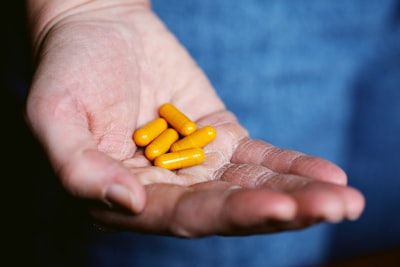
Curcumin Benefits & Dosage Guide (2026): The Complete Evidence Review
Medically reviewed by Dr. Sarah Mitchell, MD — Internal Medicine
See also: Best Supplements for Ankylosing Spondylitis: Evidence-Based Guide | Best Supplements for Plantar Fasciitis: Evidence-Based Foot Pain Guide
Quick Summary: Curcumin
| Factor | Details |
|---|---|
| What It Is | Primary active compound in turmeric (Curcuma longa) |
| Best For | Joint pain, inflammation, antioxidant support |
| Key Problem | Extremely poor bioavailability on its own |
| Solution | Enhanced-absorption forms (piperine, phytosome, micellar) |
| Effective Dose | 500-1,500mg/day of enhanced-absorption curcumin |
| Evidence Level | Strong for joint pain; moderate for systemic inflammation |
What Is Curcumin?
Curcumin is the principal polyphenolic compound found in turmeric (Curcuma longa), the golden spice used in Indian cuisine and Ayurvedic medicine for over 4,000 years. Turmeric contains approximately 2-5% curcumin by weight, and it’s responsible for most of turmeric’s documented health benefits.
The bioavailability problem: Curcumin is notoriously poorly absorbed. When consumed as plain turmeric powder, less than 1% reaches the bloodstream. It’s rapidly metabolized by the liver and intestinal wall, poorly soluble in water, and quickly eliminated. This means that eating turmeric in food — while beneficial — won’t deliver therapeutic levels of curcumin.
The solution: Several enhanced-absorption technologies have been developed that increase curcumin bioavailability by 5-80x. The form you choose matters as much as the dose.
How Curcumin Works
Anti-Inflammatory Mechanisms
Curcumin is one of the most studied natural anti-inflammatory compounds, with effects comparable to some pharmaceutical anti-inflammatories:
-
NF-κB inhibition: Curcumin potently inhibits nuclear factor kappa-B (NF-κB), the master regulator of inflammatory gene expression. This single mechanism reduces production of dozens of pro-inflammatory molecules (Aggarwal & Harikumar, 2009).
-
COX-2 inhibition: Curcumin inhibits cyclooxygenase-2 (COX-2), the same enzyme targeted by NSAIDs like ibuprofen and celecoxib — but without the GI side effects (Goel et al., 2008).
-
LOX inhibition: Curcumin inhibits lipoxygenase (LOX), reducing leukotriene production and inflammatory cascades.
-
Cytokine reduction: Curcumin reduces TNF-α, IL-1β, IL-6, and IL-8 — key inflammatory cytokines involved in chronic disease (Chainani-Wu, 2003).
-
JAK-STAT inhibition: Curcumin inhibits the JAK-STAT signaling pathway, which plays a role in autoimmune and inflammatory conditions.
Antioxidant Mechanisms
- Direct free radical scavenging: Curcumin’s phenolic structure neutralizes reactive oxygen species (ROS) and reactive nitrogen species (RNS)
- Nrf2 activation: Curcumin activates the Nrf2 pathway, upregulating endogenous antioxidant enzymes (superoxide dismutase, catalase, glutathione peroxidase)
- Metal chelation: Curcumin chelates iron and copper, preventing free radical generation via Fenton reactions
Joint-Specific Mechanisms
- Cartilage protection: Curcumin inhibits matrix metalloproteinases (MMPs) that degrade cartilage
- Synovial inflammation reduction: Reduces inflammation in the synovial membrane lining joints
- Subchondral bone protection: May slow bone remodeling changes associated with osteoarthritis
Bioavailability Forms Compared
This is the most important section. The form of curcumin you take determines whether it actually works.
| Form | Bioavailability Increase | Key Feature | Evidence Level | Cost |
|---|---|---|---|---|
| Curcumin + Piperine | 2,000% (20x) | Black pepper extract inhibits glucuronidation | Strong | $ |
| Curcumin Phytosome (Meriva) | 29x | Bound to phosphatidylcholine | Strong | $$$ |
| Micellar Curcumin (NovaSol) | 185x | Water-soluble micelle technology | Strong | $$$$ |
| CurcuRouge (CR-011) | 40x | Self-emulsifying delivery system | Moderate | $$$ |
| Theracurmin | 27x | Colloidal nanoparticle suspension | Moderate | $$$ |
| Longvida | 65x | Solid lipid particle; crosses BBB | Moderate | $$$ |
| Plain Curcumin | 1x (baseline) | No enhancement | N/A | $ |
1. Curcumin + Piperine (Best Budget Option)
How it works: Piperine (from black pepper) inhibits hepatic and intestinal glucuronidation — the metabolic process that inactivates curcumin. This increases curcumin absorption by approximately 20x.
Evidence: Shoba et al. (1998) demonstrated that 20mg piperine increased curcumin bioavailability by 2,000% in a human study (Planta Medica 64(4):353-356).
Dose: 500-1,000mg curcumin + 5-20mg piperine per dose
Pros: Inexpensive, well-studied, widely available Cons: Piperine may affect metabolism of certain medications (it inhibits CYP3A4 and P-glycoprotein)
2. Curcumin Phytosome / Meriva (Best Overall)
How it works: Curcumin is bound to phosphatidylcholine (a phospholipid), forming a phytosome complex that integrates into cell membranes for direct absorption.
Evidence: Cuomo et al. (2011) showed Meriva had 29x higher bioavailability than standard curcumin (Journal of Natural Products 74(3):489-494). Multiple clinical trials have used Meriva specifically for joint health.
Dose: 500-1,000mg Meriva (providing 100-200mg curcuminoids)
Pros: Strong clinical evidence, well-tolerated, no drug interaction concerns Cons: Higher cost than piperine form
3. Micellar Curcumin / NovaSol (Highest Bioavailability)
How it works: Curcumin is encapsulated in micelles — tiny water-soluble spheres that allow curcumin to dissolve in water and be absorbed directly.
Evidence: Schiborr et al. (2014) showed NovaSol had 185x higher bioavailability than standard curcumin (Molecular Nutrition & Food Research 58(3):516-527).
Dose: 500mg NovaSol (provides equivalent of ~92,500mg standard curcumin)
Pros: Highest bioavailability, water-soluble Cons: Most expensive option
Clinical Evidence
Joint Pain & Osteoarthritis
- Belcaro et al. (2010): Meriva (1,000mg/day) significantly reduced joint pain and improved walking distance in osteoarthritis patients. WOMAC scores improved by 58% (Panminerva Medica 52(1 Suppl 1):55-62).
- Panahi et al. (2014): Curcumin (1,500mg/day) was as effective as ibuprofen (1,200mg/day) for knee osteoarthritis pain in a randomized trial (Phytotherapy Research 28(11):1665-1671).
- Daily et al. (2016): BCM-95 curcumin (500mg, 2x/day) reduced knee pain and improved physical function in OA patients, with effects comparable to celecoxib (Journal of Medicinal Food 19(10):936-943).
- Kuptniratsaikul et al. (2014): Curcumin extract (1,500mg/day) was as effective as ibuprofen (1,200mg/day) for knee OA, with fewer GI side effects (Clinical Interventions in Aging 9:451-458).
Systemic Inflammation
- Chandran & Goel (2012): Curcumin (1,000mg/day) reduced CRP, IL-6, and TNF-α in a randomized trial in rheumatoid arthritis patients (Phytotherapy Research 26(11):1719-1725).
- Panahi et al. (2015): Curcuminoid supplementation (1,000mg/day) significantly reduced serum CRP, TNF-α, and IL-6 in patients with metabolic syndrome (Phytotherapy Research 29(9):1373-1379).
- DiSilvestro et al. (2012): Curcumin (200mg/day as Meriva) reduced CRP by 36% and improved multiple inflammatory markers in healthy adults with elevated inflammation (Nutrition Journal 11:79).
Exercise Recovery
- Nicol et al. (2015): Curcumin (5g/day) reduced muscle damage markers (CK, IL-6) and improved recovery after eccentric exercise (European Journal of Applied Physiology 115(10):2199-2209).
- Delecroix et al. (2017): Curcumin (2g/day) reduced DOMS (delayed onset muscle soreness) and maintained muscle performance after exercise (Journal of Sports Science and Medicine 16(1):147-153).
Dosing Guide
For Joint Pain / Osteoarthritis
- Meriva: 500-1,000mg/day (providing 100-200mg curcuminoids)
- Curcumin + Piperine: 500-1,000mg curcumin + 10-20mg piperine, 1-2x/day
- Micellar: 250-500mg/day
- Duration: 8-12 weeks for full effect
For Systemic Inflammation
- Meriva: 500-1,000mg/day
- Curcumin + Piperine: 500mg, 2x/day
- Duration: 4-8 weeks to see inflammatory marker changes
For Exercise Recovery
- Any enhanced form: 500-1,000mg, 2x/day
- Timing: 1-2 hours before exercise and immediately after
- Duration: During training periods
For General Antioxidant Support
- Meriva: 500mg/day
- Curcumin + Piperine: 500mg/day
- Duration: Ongoing
Take with food: Curcumin is fat-soluble. Take with a fat-containing meal for optimal absorption, even with enhanced forms.
Safety & Side Effects
Curcumin is very well tolerated. The FDA has granted it GRAS (Generally Recognized as Safe) status.
Possible side effects (rare, usually at high doses >2g/day):
- Mild GI discomfort (nausea, diarrhea, bloating)
- Headache
- Skin rash (very rare)
Precautions:
- Gallbladder disease: Curcumin stimulates bile production. Avoid if you have gallstones or bile duct obstruction.
- Blood thinners: Curcumin has mild antiplatelet activity. Use caution with warfarin, aspirin, or other blood thinners.
- Iron absorption: Curcumin chelates iron. Individuals with iron deficiency should take curcumin separately from iron supplements.
- Surgery: Discontinue 2 weeks before scheduled surgery due to antiplatelet effects.
- Drug interactions: Piperine (not curcumin itself) can affect metabolism of certain medications via CYP3A4 inhibition.
Frequently Asked Questions
Q: Is turmeric the same as curcumin? A: No. Turmeric is the root/spice. Curcumin is the active compound within turmeric, comprising only 2-5% of turmeric by weight. To get a therapeutic dose of curcumin from turmeric alone, you’d need to consume impractically large amounts. Supplements provide concentrated, standardized curcumin.
Q: Which curcumin form should I buy? A: For most people, Meriva (curcumin phytosome) offers the best balance of evidence, bioavailability, and safety. If budget is the primary concern, curcumin + piperine is effective and affordable. If you want maximum bioavailability, choose micellar curcumin (NovaSol).
Q: Can curcumin replace NSAIDs for joint pain? A: Several studies show curcumin is as effective as ibuprofen for osteoarthritis pain, with fewer GI side effects. However, do not stop prescribed medications without consulting your doctor. Curcumin can be used as a complement or alternative for mild to moderate pain.
Q: How long before I notice results? A: Joint pain: 4-8 weeks. Inflammatory markers: 4-6 weeks. Exercise recovery: 1-2 weeks. Curcumin is not an immediate pain reliever — it works by gradually reducing inflammation.
Q: Can I take curcumin with other supplements? A: Yes. Curcumin works well with omega-3 fatty acids (additive anti-inflammatory effects), glucosamine/chondroitin (joint support), and vitamin D (immune modulation). Avoid taking with iron supplements (curcumin chelates iron).
Q: Is curcumin safe for long-term use? A: Yes. Clinical trials have used curcumin for up to 12 months with no significant adverse effects. Long-term use at recommended doses (500-1,500mg/day of enhanced forms) is considered safe.
The Bottom Line
Curcumin is one of the most evidence-based natural anti-inflammatory compounds available:
- It works — Multiple RCTs show curcumin is as effective as ibuprofen for joint pain, with fewer side effects.
- The form matters — Plain curcumin is poorly absorbed. Choose an enhanced-absorption form (Meriva, micellar, or curcumin + piperine).
- Dose correctly — 500-1,000mg/day of enhanced-absorption curcumin for joint pain; 500mg/day for general anti-inflammatory support.
- Be patient — Curcumin takes 4-8 weeks for full effects on joint pain and inflammation.
- It’s safe — GRAS status, minimal side effects, well-tolerated long-term.
Our recommendation: Choose Meriva (curcumin phytosome) at 500-1,000mg/day for joint pain, or curcumin + piperine (500mg + 10mg) for budget-friendly anti-inflammatory support. Take with a fat-containing meal. Give it 8 weeks before evaluating effectiveness.
Sources: Shoba et al. (1998) Planta Medica 64(4):353-356; Belcaro et al. (2010) Panminerva Med 52(1 Suppl 1):55-62; Panahi et al. (2014) Phytother Res 28(11):1665-1671; Kuptniratsaikul et al. (2014) Clin Interv Aging 9:451-458; Chandran & Goel (2012) Phytother Res 26(11):1719-1725; Schiborr et al. (2014) Mol Nutr Food Res 58(3):516-527; Aggarwal & Harikumar (2009) Biochem Pharmacol 76(11):1590-1611
Related Articles
Explore more in our Joints guide.
- Best Supplements for Ankylosing Spondylitis: Evidence-Based Guide — We compared the best supplements for ankylosing spondylitis — curcumin, omega-3, vitamin D, boswellia, and exercise. …
- Best Supplements for Plantar Fasciitis: Evidence-Based Foot Pain Guide — We compared the best supplements for plantar fasciitis — curcumin, omega-3, vitamin C, collagen, and magnesium. Evide…
- Best Supplements for Rheumatoid Arthritis: Evidence-Based Guide — We compared the best supplements for rheumatoid arthritis — curcumin, omega-3, boswellia, ginger, and vitamin D. Evid…