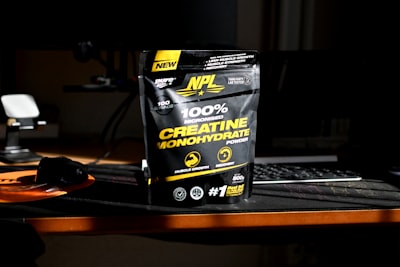
Creatine for Women: Benefits Beyond Muscle (2026 Guide)
Medically reviewed by Dr. Sarah Mitchell, MD — Internal Medicine
See also: Best Nootropics for Focus 2026: Top 7 Backed by Research | Best Supplements for Fertility 2026: Evidence-Based Guide
Quick Summary
Creatine is the most researched sports supplement in history — and women may benefit from it even more than men. Beyond muscle and strength, creatine supports brain health, bone density, mood, and may even help during pregnancy.
| Detail | Info |
|---|---|
| Best For | Strength, brain function, bone health, mood |
| Effective Dose | 3-5g/day (no loading needed) |
| Onset | 2-4 weeks for full muscle saturation |
| Safety | Excellent — 30+ years of research |
| Form | Creatine monohydrate (only form you need) |
Why Women Are Missing Out
Despite 30+ years of safety data, only 10-15% of creatine users are women. The perception that creatine is a “male bodybuilding supplement” is one of the biggest misconceptions in nutrition science.
The reality: women have lower baseline creatine stores than men (by ~20-30%), which means supplementation may produce even more noticeable benefits.
How Creatine Works
Creatine is a naturally occurring compound found in muscle cells and the brain. It serves as a rapid energy buffer:
- ATP regeneration: Creatine donates a phosphate group to ADP, regenerating ATP (your cells’ energy currency) within seconds
- Phosphocreatine system: Provides immediate energy for high-intensity efforts (first 10-15 seconds)
- Cellular hydration: Draws water into cells, promoting anabolic signaling
- Brain energy: The brain uses ~20% of the body’s energy — creatine helps maintain ATP levels during cognitive demands
Your body produces ~1-2g of creatine daily (from arginine, glycine, and methionine) and gets another ~1-2g from food (red meat, fish). Vegetarians and vegans have lower baseline stores and may benefit most from supplementation.
Benefits Specifically for Women
1. Strength & Body Composition
- Chilibeck et al. (2015): A meta-analysis of 17 RCTs found creatine supplementation during resistance training increased lean mass by 1.4kg more than placebo in women.
- Bemben et al. (2010): Women taking creatine during resistance training gained significantly more strength than placebo (20-25% greater improvement in 1RM).
- The “bloating” myth: Creatine causes intracellular water retention (inside muscle cells), not subcutaneous water retention (under the skin). This makes muscles look fuller, not bloated.
2. Bone Health
This is particularly important for women, who are at higher risk of osteoporosis:
- Chilibeck et al. (2015): Creatine + resistance training increased bone mineral density at the femoral neck by 2.4% more than resistance training alone in postmenopausal women.
- Gualano et al. (2012): Creatine supplementation reduced bone resorption markers in postmenopausal women.
3. Brain Function & Mood
The brain is a major consumer of creatine-derived ATP:
- Rae et al. (2003): 5g/day creatine for 6 weeks improved working memory and processing speed in healthy adults (particularly vegetarians).
- McMorris et al. (2007): Creatine supplementation improved cognitive performance during sleep deprivation and mental fatigue.
- Lyoo et al. (2012): 5g/day for 8 weeks reduced symptoms of major depressive disorder when added to SSRI treatment — women showed greater improvement than men.
- Allen et al. (2019): Creatine may be particularly beneficial for populations with lower baseline creatine stores (women, vegetarians, elderly).
4. Pregnancy & Postpartum
Emerging research suggests creatine may play a role in pregnancy:
- Dickinson et al. (2014): Creatine supplementation during pregnancy in animal models protected the fetal brain from hypoxic (low oxygen) injury.
- Ellery et al. (2016): The placenta contains creatine transporters, suggesting creatine is important for fetal development.
- Human trials are ongoing — creatine is not yet recommended during pregnancy pending more data, but the mechanistic rationale is strong.
5. Aging & Sarcopenia
- Candow et al. (2019): Creatine + resistance training in older women (65+) improved muscle strength, functional capacity, and reduced markers of muscle protein breakdown.
- Chrusch et al. (2001): Older women taking creatine gained more lean mass and strength than placebo during 12 weeks of resistance training.
Creatine Dosage for Women
| Protocol | Dose | Duration | Notes |
|---|---|---|---|
| Standard | 3-5g/day | Ongoing | No loading phase needed |
| Loading (optional) | 20g/day (split 4x) | 5-7 days | Saturates muscles faster, then switch to 3-5g/day |
| Cycling | 3-5g/day for 8 weeks, then 2 weeks off | Cycling | Not necessary — creatine can be taken continuously |
Our recommendation: Skip the loading phase. Take 3-5g/day of creatine monohydrate, every day, indefinitely. It’s simpler and avoids the GI discomfort that loading can cause.
Timing: Timing doesn’t matter much. Take it whenever is convenient — with a meal, post-workout, or before bed. Consistency matters more than timing.
What Form of Creatine?
Creatine monohydrate is the only form you need. It’s the most researched, most effective, and cheapest form.
Avoid:
- Creatine HCl: No evidence it’s better absorbed; more expensive
- Buffered creatine (Kre-Alkalyn): No evidence of benefit over monohydrate
- Creatine ethyl ester: Actually worse than monohydrate in head-to-head studies
- Liquid creatine: Unstable in solution; degrades to creatinine
Look for: Creapure® — the highest purity creatine monohydrate, manufactured in Germany.
Side Effects & Safety
Creatine has one of the best safety profiles of any supplement:
- 30+ years of research with no serious adverse effects in healthy individuals
- No kidney damage in healthy people (this myth has been thoroughly debunked)
- No liver damage
- No dehydration or cramping (studies show the opposite — creatine may reduce cramping)
- Weight gain: 1-3kg in the first week (water in muscle cells, not fat). This is normal and expected.
Who Should Be Cautious
- Pre-existing kidney disease: Consult your doctor before supplementing
- Bipolar disorder: Creatine may theoretically trigger mania in susceptible individuals (limited evidence)
- Pregnancy: Not yet recommended pending more human data (though mechanistic rationale is strong)
The Bottom Line
Creatine is not just for men who want big muscles. It’s one of the most evidence-based supplements for women’s health — supporting strength, bone density, brain function, and mood.
Take 3-5g of creatine monohydrate daily. It costs ~$8-12/month, has 30+ years of safety data, and provides benefits that extend far beyond the gym.
If you’re a woman who’s been avoiding creatine because of the “bulking” myth, it’s time to reconsider. The science is clear: creatine is for everyone.
Sources: Chilibeck et al. (2015) J Nutr Health Aging 19(5):561-568; Rae et al. (2003) Proc Biol Sci 270(1529):2147-2150; Lyoo et al. (2012) Am J Psychiatry 169(9):937-945; Candow et al. (2019) J Nutr Health Aging; Dickinson et al. (2014) Pediatr Res
Related Articles
Explore more in our Nootropics guide.
- Best Nootropics for Focus 2026: Top 7 Backed by Research — We ranked the best nootropic supplements for focus, concentration, and mental clarity. Evidence-based comparisons of …
- Best Supplements for Fertility 2026: Evidence-Based Guide — We compared the best fertility supplements — CoQ10, folate, DHEA, zinc, and more. Evidence-based rankings for both ma…
- Best Supplements for Nootropics Beginners 2026: Start Here — The best nootropic stack for beginners — lion’s mane, citicoline, L-theanine, omega-3, and magnesium. Safe, effective…